
Hello and Welcome to Autism at Home
Autism at Home takes a holistic approach to Autism. Autism is a puzzle with many pieces, and each individual has their own unique puzzle. This requires an open approach which considers all aspects of each individual. Autism at Home specialises in play therapy which then incorporates other beneficial therapies.
Autism at Home helps families who have children with autism and related disorders to set-up and maintain effective and holistic home-based play programmes, designed specifically for your child.
The home-based programme uses specialised play therapy to enhance the social and cognitive development of your child. The play programme is individually tailored for your child and family.
This one-to-one play takes place in your home and as the parents, you are the leaders of your programme. Autism at Home, can provide training in the specialised play therapy, help with any challenges and give guidance on running a home programme.
Autism at Home is based in Shrewsbury, Shropshire. With a purpose built centre designed specifically for helping your child and training your team in the play therapy. Families currently travel from all over the UK including Manchester, Cheshire, Herefordshire, Wales, Birmingham and the Midlands to receive this unique training.
Building your own Autism at Home program
Building your Autism at Home programme is a step by step process which is taken at your own pace.
The information provided below describes key areas that you may wish to include in your holistic play programme. (Click on the points below for more information):
Getting your programme started:
The essence of Autism at Home is about inspiring your child to want to connect with people, and then inspiring your child to want to learn from them. It is with this desire to interact with others that they can then progress in all areas of development.
The specialised play therapy in Autism at Home is primarily focused on socialisation, helping your child to socially interact and communicate. The other skills we can then teach your child will have much more value if your child is able to use them socially. Also, by increasing your child’s motivation to interact with people, encouraging them to learn skills from others will be much quicker and easier.
The primary goals for the programme are usually centred around socialisation. Through motivational play your child can enjoy interacting and learning from others.
The effectiveness of the play programme is dependent of the mind set of the person working with your child. Autism at Home advocates working with any child with respect, acceptance and belief in them. Treasuring the time spent with your child and enjoying their uniqueness.
Fully respecting and accepting your child for who they are today, what they enjoy and what they need is essential in the play. Not pressuring your child to be different, but being patient and understanding. At the same time believing that any child on the Autistic spectrum can develop and reach their full potential, therefore giving your child the opportunity to grow.
Every child is unique. Autism at Home provides an individually tailored programme that is specific to your child and family situation. Autism at Home looks deeper than a label, and looks to find out about your child. Knowing your child’s specific needs, desires, interests and challenges is crucial when designing and implementing your play programme.
The aim of the programme is not to change your child, but to help them reach their full potential. Every child is treasured, and their beauty seen and celebrated. All activities and goals are designed around who they are as an individual.
Taking your programme to the next level:
Sensory integration is the organisation of the information that is detected by our senses (taste, sight, hearing, touch, smell, movement, gravity and position). You may already be aware that your child has sensory challenges in some of these areas.
Our senses give us information about the environment around us and our body. The brain then organises this information to form perceptions, behaviour, and learning.
When sensory integration is working, it gives us meaning to what we experience, and therefore helps us to respond to the situation in a purposeful manner. It is necessary for ALL academic and social behaviour.
Sensory integration develops through movement and play, by interacting with the environment and people. Sensations are ‘food for the brain’ without them the brain is undernourished. Children usually spend the first eight years of their life developing their sensory integration, exploring, experimenting, moving, playing, and getting into mischief!
For children with Autism, sensory integration does not happen as naturally as it does for other kids, however through specialised play therapy and sensory activities, a child can continue to develop their body’s ability to integrate what is going on around them and within their body.
Autism at Home uses sensory activities within the play programme, and helps the people working with your child to become aware of their unique sensory needs.
Also help can be given with regards to concerns that can often stem from sensory integration challenges such as; eating, sleeping, toileting, dressing and washing.
Autism at Home understands the impact of nutrition on the development of any child, especially those with Autism.
The main focus of Autism at Home is providing the optimum external environment for your child to flourish. However, without the optimum internal environment development and learning can be compromised. What a child intakes determines the health of their body and brain.
If your child has challenges with digesting foods, or has intolerances, their body is spending much vital time and energy dealing with the food it is given. This time and energy could be spent on playing and learning.
Most people know what it is like to have indigestion, bloating, diarrhoea, and constipation, and how uncomfortable you feel. You can’t concentrate very well, you don’t want to do anything, or be around people. It affects your work and home life. Now try having to deal with that and being transported to another place in which you find it hard to communicate with others and it is hard to interact and understand the world around you!
Through giving your child a healthy diet that suits their body, you are reducing the stress on their system. When combining this with a rich learning environment much progress can be made.
Autism at Home can get you started on the journey to helping your child’s internal health.
Some Autism specific Diets include:
• Specific Carbohydrate Diet (SCD)
• Fiengolds Diets
• The Body Ecology Diet
• Elimination Diet
• GAPS
Autism at Home understands the importance of encouraging your child to become increasingly more independent. This can be incorporated into the play programme, as well as the play techniques being easily used around the house and in other environments.
As with any goal in the programme independence is introduced when your child is ready and goes at their own pace. It may involve encouraging them to hold a spoon, put on an item of clothing, cook a meal, use the toilet, or tidy their toys. The level of challenge will be dependent on your child.
Your child’s own motivations will be incorporated into the goal to inspire them to stretch themselves and be more independent. The level of challenge will increase as they move through stages of social and cognitive development.
Helping your child gain more independence can be very rewarding for everyone in the programme. As independence increases your child’s confidence and pride usually shines too.
There is no one set formula for running an Autism at Home programme for your child. Some parents choose to run a full time programme, others choose a part time or an after school programme. In any of these scenarios it is important to introduce academics and cognitive activities into the play once your child has reached a certain stage in their social programme.
The social focus of the programme is still priority in the play, however Autism at Home understands that once your child is able to interact and communicate at a certain level, it is essential to provide a rounded and complete programme of development. This is includes cognitive development, academics and outdoor activities.
Your child’s motivations and interests will be incorporated once again into any cognitive and academic learning, and into outdoor activities. This will make them meaningful and desirable to your child. The introduction of such activities will also go at your child’s own pace.
Outdoor activities are valued in an Autism at Home programme. It is essential that any child receives the space and opportunity to move their bodies and explore. Also Vitamin D which is received from sunlight is essential for calcium absorption.
However the outdoor environments are chosen wisely and your child’s response to them is closely monitored. If your child becomes over stimulated or has to be overly controlled an alternative environment may be chosen.
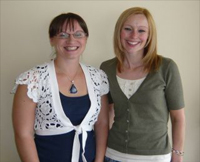
Sarah Gibson
Autism Consultant
- Founder and Director of Autism at Home
- Psychology BSc (Hons)
- Certified as Son-Rise Program Child Facilitator (2006-2008)
- Authorised Listening Program Provider
- HANDLE Introductory Activities Coach.
- Diploma in Nutrition from the Institute of Natural Healing. Dip.N (Inst NH)